
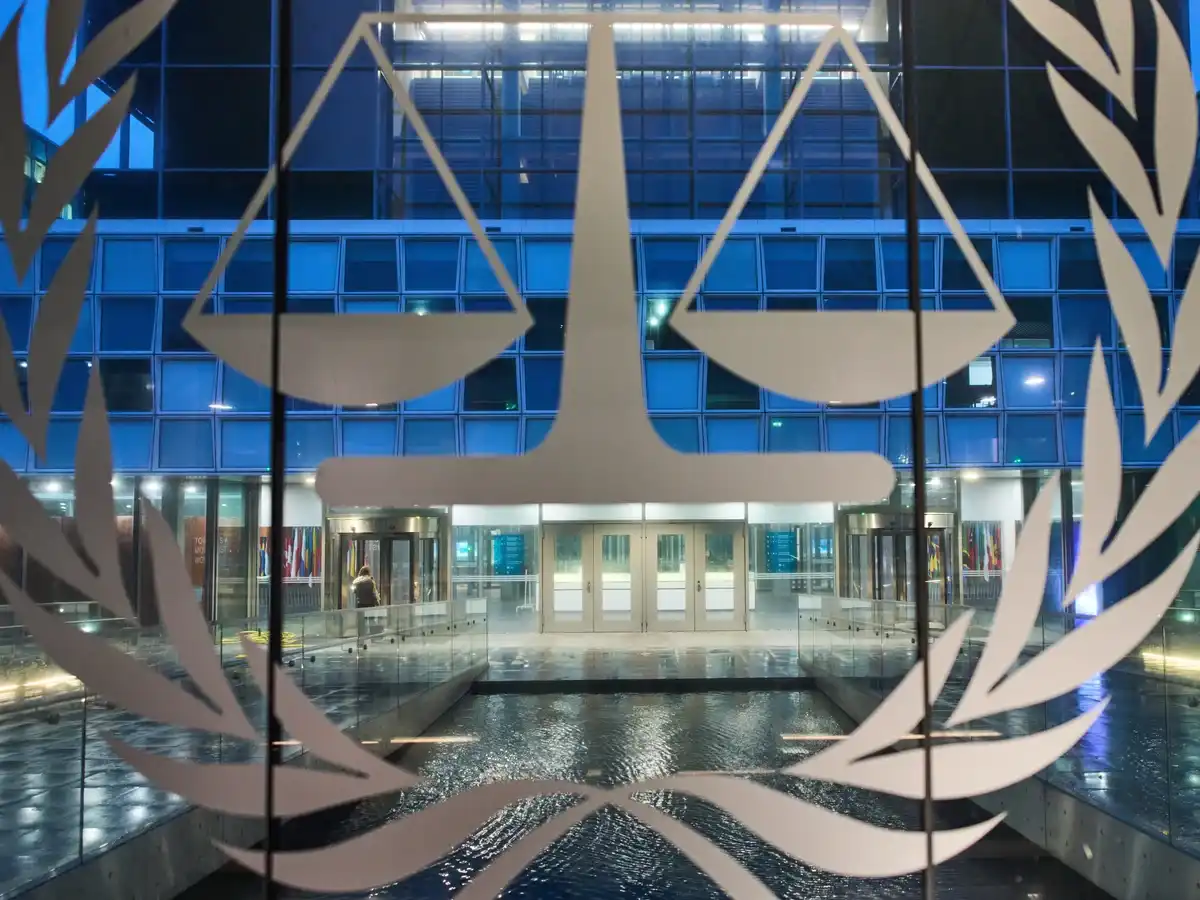
A growing international dispute between the United States, Europe, and the International Criminal Court has reignited debate over global justice, sovereignty, and political influence in international law. Following the U.S. decision to impose sanctions on members of the International Criminal Court after arrest warrants were issued for members of the Israeli cabinet, a former prosecutor is now urging the European Union to take unprecedented legal action.
The proposal calls for the European Union to establish a “blocking statute” designed to shield ICC judges, prosecutors, and officials from U.S. sanctions. The controversy has intensified tensions between Washington and European allies while placing the ICC at the center of a wider geopolitical struggle over accountability and international legal authority.
The issue goes far beyond a legal disagreement. It reflects a larger global conflict over whether powerful nations should be able to influence or punish international institutions when politically sensitive cases arise.
What Triggered the Conflict?
The dispute escalated after the ICC issued arrest warrants connected to members of the Israeli government over alleged actions linked to the ongoing conflict in Gaza. In response, the United States announced sanctions against nine ICC judges and a prosecutor associated with the court’s investigations.
The sanctions reportedly include travel restrictions, financial limitations, and measures designed to isolate those officials from aspects of the U.S. financial system.
Critics of the sanctions argue that the move represents political interference in an independent judicial institution. Supporters, however, claim the ICC exceeded its authority and unfairly targeted a close U.S. ally.
The decision immediately sparked backlash among international law experts, human rights advocates, and several European political figures.
The ICC and Its Role in International Law
The International Criminal Court was established in 2002 under the Rome Statute to prosecute individuals accused of genocide, war crimes, crimes against humanity, and aggression.
Unlike national courts, the ICC operates as an international judicial body designed to hold individuals accountable when domestic legal systems are unwilling or unable to act.
The court has investigated cases involving multiple countries and conflicts, including situations in Africa, Eastern Europe, and the Middle East.
However, the ICC has long faced criticism from powerful nations that view certain investigations as politically motivated or jurisdictionally problematic.
The United States itself is not a party to the Rome Statute and has historically maintained a complicated relationship with the court.
Why the United States Imposed Sanctions
The sanctions reflect longstanding U.S. opposition to ICC jurisdiction over American allies and personnel.
Washington has argued for years that the court should not exercise authority over citizens or officials from countries that are not signatories to the Rome Statute. U.S. officials also contend that investigations involving Israel cross political and diplomatic red lines.
The Biden administration previously eased some tensions with the ICC after earlier disputes during the first Trump presidency. However, the latest developments suggest a renewed hardline stance.
Supporters of the sanctions argue that the ICC’s actions threaten diplomatic stability and unfairly single out democratic allies while failing to adequately address abuses by authoritarian regimes.
Critics strongly reject this argument, claiming that accountability must apply equally regardless of political alliances.
Former Prosecutor Calls for EU Action
In response to the sanctions, a former ICC prosecutor and several legal experts are now calling on the European Union to enact a blocking statute.
A blocking statute is a legal mechanism designed to protect individuals and organizations from the extraterritorial effects of foreign sanctions.
The European Union has previously used similar measures to counter U.S. sanctions policies involving countries such as Cuba and Iran.
Under such a statute, EU-based entities could potentially be prohibited from complying with certain U.S. sanctions measures targeting ICC officials.
Supporters of this proposal argue that Europe must defend judicial independence and international legal institutions from political pressure.
What Is an EU Blocking Statute?
A blocking statute is essentially a legal shield.
It allows governments or regional bodies like the European Union to protect individuals, businesses, or institutions from sanctions imposed by foreign countries that are considered illegitimate or politically overreaching.
The EU Blocking Statute currently exists in relation to some U.S. sanctions involving Iran and Cuba. It prohibits European companies from complying with specific American sanctions and allows affected parties to recover damages caused by those sanctions.
Applying a similar framework to ICC officials would represent a dramatic escalation in transatlantic legal tensions.
It would also send a strong signal that Europe intends to defend the independence of international legal institutions.
Why Europe Is Under Pressure
European governments face growing pressure to respond because many EU countries are strong supporters of the ICC and international legal frameworks.
The European Union has consistently positioned itself as a defender of multilateral institutions and rules-based global governance.
If the EU remains passive while ICC officials face sanctions, critics argue it could undermine Europe’s credibility as a champion of international law.
At the same time, European leaders must balance legal principles with strategic relations with the United States.
This creates a difficult diplomatic situation.
On one side are calls to protect the ICC from political retaliation. On the other are concerns about escalating conflict with Washington during an already unstable geopolitical period.
The Israel Factor
The controversy cannot be separated from the broader political sensitivities surrounding Israel.
The ICC’s decision to issue warrants related to Israeli officials has intensified already polarized global debates about the Gaza conflict, humanitarian law, and accountability.
Israel and its allies argue that the warrants unfairly target Israeli leaders while failing to adequately consider the security challenges posed by regional conflicts and militant groups.
Supporters of the ICC investigation argue that no country should be immune from scrutiny under international law.
This divide has transformed the ICC into a focal point of broader geopolitical and ideological conflicts.
International Law vs National Sovereignty
At the heart of the controversy lies a fundamental question:
Should international courts have the authority to investigate leaders and officials from sovereign nations?
Supporters of the ICC argue that international justice mechanisms are necessary to prevent impunity for serious crimes.
Critics argue that unelected international institutions should not override national sovereignty or democratic governance.
The United States has historically leaned toward the sovereignty argument, particularly when international institutions investigate American allies or military personnel.
European nations, while not uniform in their views, generally place stronger emphasis on multilateral legal frameworks.
The current sanctions dispute reflects this philosophical divide.
Risks to the ICC’s Independence
Many legal scholars warn that sanctions against judges and prosecutors could have chilling effects on international justice.
If judicial officials face personal punishment for politically controversial decisions, future investigations may become vulnerable to political intimidation.
Critics of the sanctions argue that this undermines the principle of judicial independence, which is central to both domestic and international legal systems.
Some experts fear the precedent could weaken not only the ICC but also broader global accountability mechanisms.
Others argue that international institutions must still remain accountable and avoid politicized prosecutions.
Could the EU Actually Implement a Blocking Statute?
Legally, the European Union likely has the authority to implement such protections. Politically, however, the situation is more complicated.
EU member states do not always agree on foreign policy matters, especially regarding Israel, the United States, and Middle Eastern geopolitics.
Some governments may hesitate to support measures that could provoke retaliation from Washington or damage economic relationships.
Others may strongly support defending the ICC as part of Europe’s commitment to international law.
As a result, negotiations within the EU could become highly contentious if the proposal gains momentum.
The Growing Politicization of International Courts
The ICC controversy also reflects a broader trend: the increasing politicization of international legal institutions.
Over the past decade, international courts and tribunals have become more deeply entangled in geopolitical disputes.
Cases involving war crimes, sanctions, territorial conflicts, and human rights increasingly carry major diplomatic consequences.
This creates challenges for judicial institutions that rely heavily on international cooperation and legitimacy.
When powerful nations reject or retaliate against court decisions, the authority of international law becomes more fragile.
Public Opinion and Global Perception
Public opinion on the issue remains deeply divided.
Supporters of the ICC view the sanctions as an attack on global accountability and judicial independence.
Critics see the court as overreaching and politically selective.
The dispute has also intensified global debates about double standards in international law. Some observers argue that powerful countries support international courts only when investigations align with their geopolitical interests.
This perception poses long-term challenges for the credibility of international justice systems.
The Future of U.S.-EU Relations
The controversy could place additional strain on relations between the United States and European allies.
Although the transatlantic alliance remains strong in many areas, disagreements over international law, sanctions policy, and Middle Eastern politics continue to create friction.
If the European Union moves forward with legal protections for ICC officials, tensions with Washington could escalate further.
However, failure to act may also create internal criticism within Europe from legal experts, activists, and political leaders who view defense of the ICC as essential.
What Happens Next?
Several possible scenarios could unfold in the coming months:
- The EU may formally debate a blocking statute proposal
- Additional sanctions could be introduced by the United States
- European leaders may seek diplomatic compromise behind the scenes
- ICC investigations may continue despite political pressure
- International legal organizations could increase support for sanctioned officials
Much will depend on how aggressively both sides pursue escalation.
Conclusion
The growing conflict over U.S. sanctions on ICC members has evolved into a defining battle over the future of international law.
The call for an EU blocking statute reflects mounting concern that judicial independence and multilateral institutions are increasingly vulnerable to geopolitical pressure.
For supporters of the ICC, defending the court is about preserving accountability regardless of political alliances.
For critics, limiting the court’s reach is about protecting sovereignty and preventing politically motivated prosecutions.
As tensions rise between Washington, Brussels, and international legal institutions, the outcome of this dispute could shape the future balance between national power and global justice for years to come.
Citation Section
- International Criminal Court Official Website
- European Union Official Website
- United Nations International Law Overview
- Council of the European Union Sanctions Information
- Human Rights Watch International Justice Coverage