
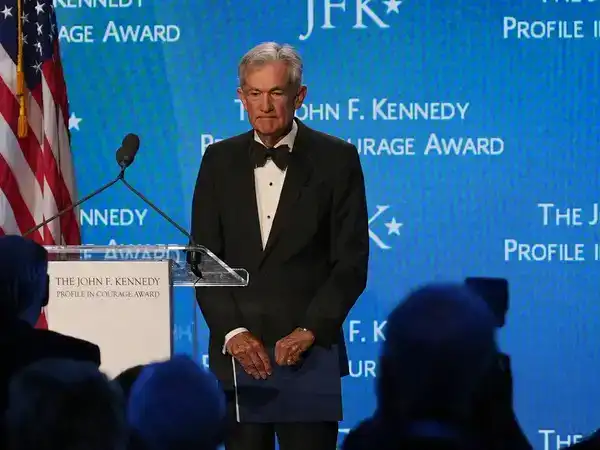
The Fed Is Suddenly at the Center of a Political Fight
The debate over the independence of the Federal Reserve is heating up again after former Federal Reserve Chair Jerome Powell raised concerns about what he described as political interference in monetary policy.
Powell warned that the central bank has been going through what he called a “stress test,” especially during periods of heightened tension between the Federal Reserve and Donald Trump’s administration. His comments come at a time when the role of the central bank is being questioned more aggressively than it has been in years.
At the heart of the controversy is a growing fear that monetary policy—normally insulated from politics—is becoming part of a much larger political power struggle.
The Federal Reserve, officially known as the Federal Reserve, is supposed to operate independently from the White House. But recent events suggest that boundary is being tested in ways that could reshape how U.S. economic power actually works.
Powell’s Warning About Political Pressure
Powell’s warning was not subtle. He suggested that the Federal Reserve has been operating under increasing political pressure, especially during moments when interest rate decisions clash with political expectations.
While central bankers usually avoid direct political conflict, Powell has repeatedly emphasized that interference—whether direct or indirect—can weaken trust in the system.
The concern is simple: if markets believe interest rates are being influenced by politics rather than economic data, confidence begins to break down.
And once that confidence is damaged, it becomes harder for the Federal Reserve to do its job effectively.
Trump vs the Fed: A Long-Simmering Conflict
The tension between Donald Trump and the Federal Reserve is not new. During his time in office, Trump frequently criticized interest rate decisions, often arguing that the central bank was moving too aggressively and slowing economic growth.
He publicly pressured the Fed at several points, something that broke long-standing political norms in Washington.
Traditionally, presidents avoid direct attacks on the Federal Reserve to preserve the appearance of independence. But during Trump’s presidency, that line became much more blurred.
He questioned leadership decisions, criticized rate hikes, and openly expressed frustration with the direction of monetary policy.
This created a political environment where the Fed was no longer fully shielded from public political pressure.
The Supreme Court Factor Changes Everything
What makes the current situation more intense is that the debate is no longer just political—it’s also legal.
The Supreme Court is now weighing a case involving the attempted removal of a Federal Reserve governor by a sitting president. That case could determine how much control a president actually has over the central bank.
At stake is a fundamental question:
Should the president have the power to remove officials from an institution designed to be independent?
If the court expands presidential authority, it could fundamentally shift the balance of power between the White House and the Federal Reserve.
That would mean future presidents could potentially exert much more influence over monetary policy than they do today.
Why the Federal Reserve Was Designed to Be Independent
The reason the Federal Reserve was structured to be independent goes back to one core idea: economic decisions should not be driven by short-term politics.
The Federal Reserve controls interest rates, manages inflation, and stabilizes the financial system. These decisions often require long-term thinking that doesn’t always align with election cycles.
Politicians may want lower interest rates to boost the economy before elections. But central bankers are supposed to focus on inflation control and long-term stability instead.
If political pressure becomes too strong, it can lead to:
- artificial economic boosts before elections
- higher inflation over time
- unstable financial markets
- reduced investor trust
That’s why independence has always been considered essential.
What Powell Means by a “Stress Test”
When Powell described the Federal Reserve as undergoing a “stress test,” he wasn’t talking about a formal economic evaluation.
He was referring to something more structural: the institution being pushed to its limits by political and legal pressure.
This includes:
- public criticism of Fed decisions
- political arguments over interest rates
- uncertainty over leadership authority
- legal challenges involving executive power
Even if the Fed continues making decisions independently, the perception of pressure alone can affect markets.
In finance, perception is often just as important as reality.
Interest Rates Are the Real Battleground
At the center of all this conflict is one powerful tool: interest rates.
Interest rates influence nearly everything in the economy, including:
- mortgages
- credit cards
- business loans
- stock markets
- currency strength
That means whoever influences interest rate policy indirectly influences the entire economy.
This is why political leaders often care deeply about Fed decisions, especially during times of economic slowdown or election cycles.
But it’s also why central banks resist political involvement—because short-term economic boosts can lead to long-term instability.
The Growing Risk of Political Interference
Economists warn that even the perception of political interference can cause problems.
If investors believe the Federal Reserve is being pressured, they may start:
- pulling money from markets
- demanding higher returns on bonds
- reducing long-term investments
- reacting more aggressively to policy changes
That creates volatility, even if the Fed is still technically independent.
Powell’s warning is essentially about protecting credibility—because once credibility is lost, it is extremely difficult to regain.
The Global Impact of Fed Independence
The Federal Reserve doesn’t just affect the United States. It influences the entire global financial system.
When the Fed changes interest rates, it affects:
- global borrowing costs
- currency exchange rates
- international investment flows
- emerging markets
That means any instability in the Fed’s independence doesn’t stay inside the U.S.—it spreads worldwide.
This is why global financial institutions watch Fed politics so closely.
Legal Experts See a Turning Point
Legal scholars say the Supreme Court case could become a turning point in how independent agencies are treated in the United States.
If the court rules that presidents have broader authority to remove Fed officials, it could open the door to greater political control over institutions that were originally designed to be insulated.
That might not just affect the Federal Reserve—it could also impact other regulatory agencies that currently operate with partial independence.
Political Debate Gets Sharper
As expected, the political reaction is divided.
Some argue that elected leaders should have more control over economic policy institutions. From their perspective, accountability should rest with voters, not unelected officials.
Others argue the opposite—that removing independence from the Federal Reserve would turn monetary policy into a political weapon, leading to instability and economic manipulation.
This debate is not new, but it has become more intense as political polarization increases.
Why Markets Are Paying Attention
Financial markets hate uncertainty, and this situation creates exactly that.
Investors are not just watching interest rates—they are watching whether the system that sets those rates remains stable and independent.
Any hint that political pressure could shape monetary decisions makes markets more reactive and less predictable.
That’s why Powell’s comments carry weight far beyond Washington—they directly influence investor sentiment.
Conclusion: A Quiet Power Struggle With Big Consequences
What looks like a technical debate over monetary policy is actually a deeper power struggle over who controls the U.S. economy.
Powell’s warning highlights growing concern that the Federal Reserve is being pulled into political conflict at a time when stability is supposed to be its strongest feature.
With the Supreme Court now involved and political tensions rising, the question of Fed independence is no longer theoretical.
It is becoming a real-time political battle with consequences that could last for decades.
Whether the Federal Reserve remains insulated from political pressure—or becomes more exposed to it—will shape not just the U.S. economy, but global financial stability as a whole.
Citation Section
Federal Reserve Official Website
Supreme Court of the United States
Reuters Business News
International Monetary Fund