
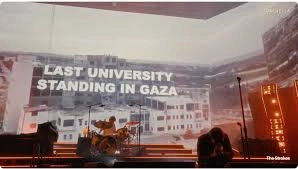
The Strokes’ Coachella Weekend 2 performance sparked major Hollywood debate after a politically charged video referenced U.S. and Israeli actions in Iran and Gaza. Here’s a full breakdown of the performance, reactions, and controversy.
Hollywood and music festival news collided after alternative rock band The Strokes closed their Weekend 2 performance at Coachella with a highly controversial and politically charged visual presentation.
The moment immediately went viral online, sparking global debate, mixed public reactions, and widespread discussion across entertainment and political commentary platforms. The band ended their set with a video montage that referenced international conflicts, including U.S. foreign policy and Israeli military actions in Iran and Gaza.
As clips circulated online, audiences and critics began dissecting the meaning behind the performance, the intent of the band, and whether music festivals are becoming increasingly political spaces.
This article breaks down what happened, why it is trending in Hollywood news, and how audiences reacted.
Who Are The Strokes?
The Strokes are an American rock band formed in New York City, widely credited with helping revive garage rock in the early 2000s. Known for songs like “Last Nite” and “Reptilia,” the band has maintained a strong cultural presence in alternative music for over two decades.
Fronted by Julian Casablancas, the group has often been associated with artistic experimentation and subtle political commentary, though not always in overtly public or controversial ways—until now.
What Happened at Coachella?
During their Weekend 2 performance at Coachella, The Strokes closed their set with the song “Oblivius”, accompanied by a large LED screen video montage.
According to multiple reports, the visuals included:
- Historical references to alleged U.S. foreign interventions
- Imagery tied to conflicts in the Middle East
- References to destruction of infrastructure and universities in Iran
- Visuals connected to the Gaza conflict
- Messaging criticizing global military actions and political power structures
The performance ended abruptly after the video concluded, without additional explanation from the band on stage.
Why the Performance Became a Hollywood News Story
This moment quickly became a Hollywood entertainment headline for several reasons:
1. Coachella’s Global Visibility
Coachella is one of the most watched music festivals in the world. Any controversial moment on its main stage is instantly amplified through livestreams and social media clips.
2. Political Content in a Music Setting
The inclusion of politically charged imagery in a major music performance immediately triggers public debate about whether festivals should remain entertainment-only spaces or serve as platforms for activism.
3. Timing and Global Sensitivity
The references to ongoing conflicts involving Iran and Gaza added intensity to the reaction, making the moment even more widely discussed.
What Was Shown in the Video?
Reports from multiple entertainment outlets describe the montage as a sequence combining historical and modern references.
It allegedly included:
- Images of political leaders linked to past regime changes
- Footage referencing U.S. foreign intervention history
- Visuals showing destruction in conflict zones
- Captions referencing damage to universities in Iran
- Imagery connected to Gaza infrastructure destruction
The band performed while these visuals played behind them, with lead singer Julian Casablancas repeating the lyric idea:
“What side are you standing on?”
The performance ended without commentary after the video concluded.
Public Reaction: Mixed and Highly Divided
The reaction to the performance was immediate and polarized.
Supportive Reactions
Many fans praised the band for using their platform to address global issues. Supporters described the moment as:
- Bold
- Artistic
- Politically aware
- Important for raising awareness
Some viewers felt it added depth to the performance and aligned with the band’s artistic identity.
Critical Reactions
Others criticized the performance, arguing that:
- Music festivals should remain non-political
- The messaging was too one-sided or unclear
- The visuals were too intense for an entertainment setting
- It could alienate audiences
This group viewed the moment as controversial rather than artistic.
Neutral / Confused Reactions
A large portion of viewers were simply confused, with many asking:
- What the message was intended to be
- Whether the content was factual or symbolic
- Why it was included in a festival set
This uncertainty fueled further online discussion.
Why This Moment Went Viral
The performance spread quickly due to several factors:
Festival Livestream Exposure
Because Coachella performances are streamed globally, the moment was instantly captured and shared.
Social Media Amplification
Clips were reposted across TikTok, X (Twitter), and Instagram within minutes.
Political Sensitivity
Any reference to real-world conflicts involving Iran and Gaza naturally draws global attention.
Band Legacy
The Strokes already have a strong fan base, meaning anything they do is highly shareable.
Is This New for The Strokes?
While The Strokes are not traditionally known as a heavily political band, they have occasionally incorporated subtle commentary into performances and interviews.
However, this Coachella set represents one of their most openly political stage presentations to date, marking a shift in how they use live performance visuals.
The Bigger Hollywood Trend: Music Meets Politics
This moment also reflects a broader Hollywood and entertainment trend where:
- Artists use major festivals for activism
- Live performances include political messaging
- Social media turns concerts into global political discussion points
Coachella in particular has become a frequent stage for these moments, with multiple artists over the years using performances to make public statements.
What Happens Next?
Following viral performances like this, typical outcomes include:
- Media interviews or follow-up statements
- Continued online debate
- Analysis from entertainment journalists
- Possible clarification from the artist
- Long-term cultural discussion about music and politics
At this stage, no formal detailed explanation has been issued beyond the performance itself.
Conclusion
The Strokes’ Weekend 2 Coachella performance has become one of the most talked-about Hollywood music moments of the year. By closing their set with a politically charged video referencing global conflicts, the band sparked widespread discussion about art, activism, and the role of music festivals in modern political expression.
While some viewers praised the bold artistic statement, others criticized it as controversial or inappropriate for a music event. Regardless of perspective, the moment has firmly entered the broader Hollywood entertainment conversation.
What remains clear is that performances like this continue to blur the line between entertainment and political commentary in today’s global media landscape.
Citation Section
The following sources provide background context on the performance and related entertainment reporting:
- Coachella festival overview:
https://en.wikipedia.org/wiki/Coachella_Valley_Music_and_Arts_Festival - The Strokes band background:
https://en.wikipedia.org/wiki/The_Strokes - Entertainment reporting and coverage of the performance:
https://www.variety.com/
https://www.hollywoodreporter.com/
https://www.stereogum.com/ - News reporting on Coachella 2026 performance:
https://www.theguardian.com/music
https://www.bbc.com/news/entertainment_and_arts