
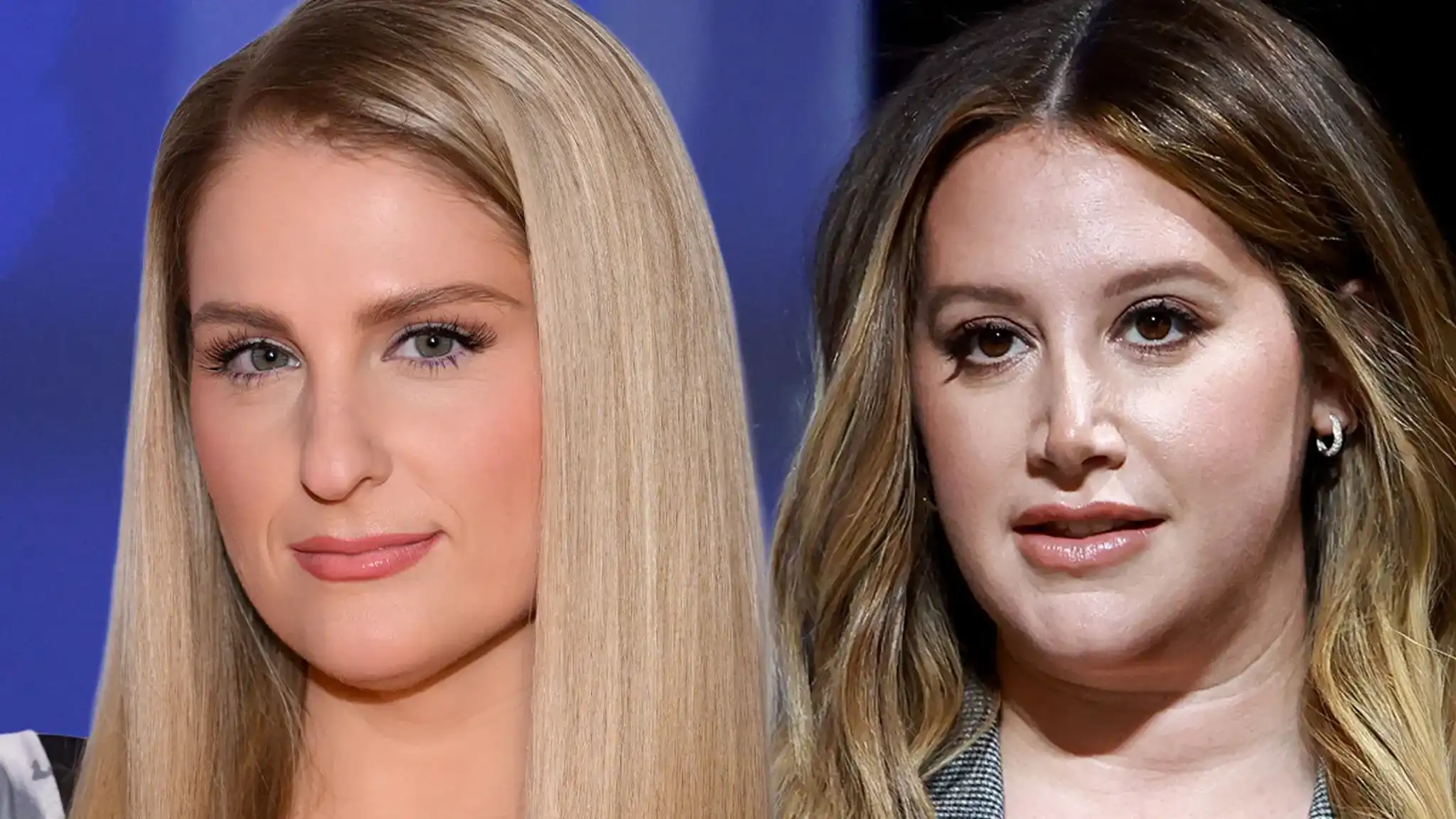
The world of celebrity parenting and friendship circles recently found itself at the center of a social media storm. The controversy began with actress Ashley Tisdale sharing her experience in what has been described as a “toxic mom group,” a circle of high-profile mothers that reportedly left her feeling excluded and emotionally drained. Among the names speculated to be part of the group was Grammy-winning singer Meghan Trainor, who has since issued a clear public statement denying any involvement.
In this article, we explore the background of the controversy, Meghan Trainor’s response, the role of social media in escalating the drama, public and celebrity reactions, and the broader implications for online celebrity discourse.
The Origins of the Controversy: Ashley Tisdale’s Essay
Ashley Tisdale, known for her work in High School Musical and numerous television projects, published a viral essay in early January 2026 detailing her experience leaving a social circle of celebrity moms. She described the group as emotionally exhausting, and she referred to it as toxic, highlighting exclusionary behavior, unspoken cliques, and the pressure of maintaining appearances in a high-profile environment.
Although Tisdale did not publicly name specific individuals, social media users quickly speculated about which celebrities could be involved. Some online commentary pointed toward names like Hilary Duff, Mandy Moore, and Meghan Trainor, with posts circulating across Twitter, Instagram, and TikTok attempting to piece together alleged evidence based on past photos and public appearances.
The essay struck a chord because it touched on a reality many parents, especially mothers, experience in private social circles: the challenges of balancing friendship, parenting responsibilities, and social expectations. Tisdale’s candidness resonated with fans but also inadvertently opened the door for online speculation and rumor.
Meghan Trainor’s Response to the Rumors
Rather than remain silent, Meghan Trainor took to TikTok and other social media platforms to address the rumors directly. In a series of videos, she denied any involvement in the so-called “toxic mom group.”
Trainor used humor and sincerity to make her point, emphasizing that she had no connection to the conflicts described in Tisdale’s essay. She also highlighted that her focus is on family life and her own friendships, distancing herself from the idea of cliques or exclusionary behavior.
In one TikTok video, Trainor addressed the audience directly, saying:
“Just to clear this up, I’m not involved in any drama or toxic groups. I’m too busy enjoying my family, my kids, and making music to worry about this.”
Her direct engagement with fans helped clarify her position and counter the narratives being spread online.
The Role of Social Media in Amplifying the Story
Social media played a pivotal role in escalating the drama. Users on platforms like TikTok, Instagram, and Twitter began dissecting photos of Tisdale and other celebrity mothers, trying to identify who might be part of the group. This “detective-style” speculation led to a viral cycle in which rumors spread faster than verified information, making it difficult for fans and even media outlets to distinguish between fact and conjecture.
Reddit communities and celebrity gossip forums further fueled the conversation. Fans and critics debated the ethics of online speculation, with some expressing concern over how quickly public figures can become embroiled in rumors without confirmation.
The Trainor situation demonstrates how social media can amplify unverified claims, forcing celebrities to address false narratives proactively.
Reactions from Other Celebrities
Hilary Duff
Hilary Duff, another celebrity name associated with the rumors, commented on the situation by expressing surprise and discomfort over being dragged into public speculation. She emphasized the importance of respecting privacy and cautioned against assuming guilt based on online chatter.
Mandy Moore
Mandy Moore, while not issuing a formal statement, reportedly communicated through her publicist that she does not engage in cliques that exclude others and encourages supportive relationships among fellow celebrity parents.
Kaley Cuoco and Others
Some celebrities, like Kaley Cuoco, took a more dismissive approach, suggesting that social media exaggerates minor conflicts and that personal relationships should remain private. These reactions highlight the divide between celebrities who feel compelled to respond to rumors and those who prefer to remain above the online noise.
Understanding Celebrity “Mom Groups” and Social Pressure
The concept of celebrity mom groups is not new. Social circles among high-profile parents often involve shared experiences, such as childcare, school schedules, and public appearances. However, these groups can also be fertile ground for misunderstandings, jealousy, and exclusion.
Experts in social psychology note that high-pressure environments, combined with public scrutiny, can intensify feelings of competition and insecurity. In these contexts, even small disagreements may be amplified into what outsiders perceive as “toxic” behavior.
Ashley Tisdale’s essay likely tapped into these dynamics, which are common among all social groups, not just celebrity parents. By publicly sharing her experiences, Tisdale illuminated an issue many fans may relate to while inadvertently creating a situation where others were unfairly implicated.
Meghan Trainor’s Strategy in Handling Public Rumors
Trainor’s handling of the situation serves as a case study in managing celebrity rumor in the digital age:
- Direct Communication: She addressed fans directly on platforms where the rumors were spreading, removing ambiguity.
- Humor and Personality: By blending sincerity with lightheartedness, she made her denial relatable and less confrontational.
- Focusing on Positivity: Trainor redirected attention to her family life, music projects, and public engagements rather than engaging in back-and-forth drama.
- Consistency: Repeated messaging across multiple posts reinforced her stance and minimized confusion.
This approach has been praised by media commentators as a way for public figures to regain control of narratives that could otherwise dominate gossip cycles.
Lessons for Fans and the Public
The Meghan Trainor situation provides broader lessons for fans and online communities:
- Avoid assumptions: Online speculation often spreads faster than facts, potentially harming individuals unfairly.
- Respect privacy: Celebrity friendships, like any personal relationships, are private matters.
- Recognize media framing: Stories about “toxic groups” often simplify complex social dynamics for dramatic effect.
- Critically evaluate sources: Rely on verified media and direct statements from celebrities rather than viral social media posts.
By keeping these principles in mind, fans can enjoy celebrity news responsibly without contributing to the spread of misinformation.
The Future of the “Toxic Mom Group” Narrative
While Meghan Trainor has firmly denied involvement, the story remains a cautionary tale about how rumors can escalate online. Ashley Tisdale’s essay has sparked conversation about social pressure, emotional labor among parents, and the challenges of navigating friendships in public-facing lives.
Whether other names will surface or the focus will shift back to the essay itself, celebrities are increasingly expected to address rumors quickly, especially when social media amplifies speculation.
Final Thoughts
Meghan Trainor’s public denial of involvement in Ashley Tisdale’s “toxic mom group” underscores the challenges of maintaining privacy in the digital age. By addressing the rumors directly and using humor, Trainor has clarified her position and demonstrated an effective way for celebrities to handle false narratives.
At the same time, Tisdale’s essay sheds light on the pressures of high-profile social circles and highlights broader issues that resonate with fans. Ultimately, this episode is a reminder of the importance of cautious engagement with celebrity gossip, critical thinking when encountering unverified claims, and empathy for those navigating both public and private pressures.
Sources:
• Meghan Trainor Denies Involvement in Alleged Toxic Mom Group Drama, Tribune.com.pk (Click here)
• Who Is in Ashley Tisdale’s Now-Former Toxic Mom Group? Breaking Down the Rumors, HollywoodLife (Click here)
• Meghan Trainor Claims Innocence Over Toxic Mom Group Drama on TikTok, RealityTea (Click here)
 Jenn Sass