
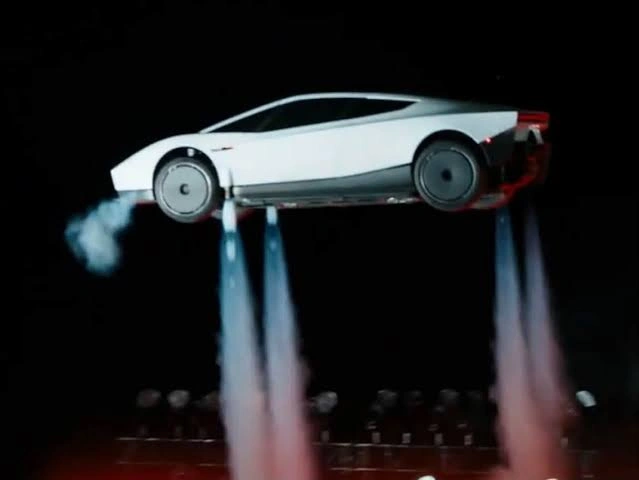
Tesla’s flying Roadster is more than an ambitious electric sports car. It highlights how Elon Musk is positioning Tesla for a future shaped by artificial intelligence, autonomous driving, and growing competition from China’s electric vehicle manufacturers.
Tesla’s futuristic Roadster has put the spotlight back on the company’s ability to turn bold engineering ideas into global headlines. Featuring rocket-inspired cold-gas thrusters and a demonstration involving airborne maneuvers, the next-generation electric sports car promises a dramatic departure from conventional vehicle design. Yet its significance extends beyond speed, stunts, and futuristic technology.
The bigger story is the changing global automotive race. Chinese electric vehicle manufacturers are competing aggressively on price, technology, and production scale, while Tesla is increasingly emphasizing autonomous driving, robotics, and artificial intelligence. These developments raise an important question: Is Tesla’s flying Roadster a glimpse of the future of transportation, or a marketing statement about where the company wants to go next?
According to The Wall Street Journal’s report on Tesla’s flying Roadster, the vehicle’s unveiling reflects a broader shift in the automotive industry. While the Roadster showcases Tesla’s appetite for ambitious innovation, it also highlights the pressure facing Western automakers as Chinese competitors gain ground.
Understanding the Roadster requires looking beyond its extraordinary performance claims to the business strategy, manufacturing challenges, and technological competition shaping the future of electric vehicles.
What Is Tesla’s Flying Roadster?
Tesla’s flying Roadster is a next-generation electric sports car concept featuring aerospace-inspired technology designed to produce brief airborne maneuvers. The demonstration showcased the vehicle using cold-gas thrusters, which release pressurized gas to generate controlled bursts of force.
Unlike a conventional electric vehicle, which relies on its electric motors and tires to accelerate and maneuver on the road, a thruster-equipped vehicle can use additional directional force for specialized movements. Tesla’s approach draws on technology associated with SpaceX, the aerospace company also led by Elon Musk.
The concept has attracted attention because it combines the performance of an electric sports car with features more commonly associated with rockets and experimental vehicles. However, the demonstration should not be confused with proof that Tesla has developed a practical flying car capable of sustained flight.
A brief airborne maneuver is very different from carrying passengers through the air over meaningful distances. Sustained flight would require additional engineering, control systems, safety measures, and regulatory approval.
Tesla has indicated that production is targeted for 2028, meaning the vehicle remains a future product rather than a widely available production car. Its final specifications, delivery schedule, pricing, and regulatory status will determine how much of the demonstration translates into a commercial vehicle.
For now, the Roadster is best understood as an ambitious performance project that also serves as a powerful symbol of Tesla’s technological identity.
Why Is Tesla’s Flying Roadster Important to the Global Auto Race?
Tesla’s Roadster matters because the electric vehicle industry is entering a more competitive phase. Early electric vehicle leaders benefited from proving that battery-powered cars could offer compelling performance and appeal to mainstream consumers. Today, more manufacturers can build competitive electric vehicles, making differentiation increasingly difficult.
Chinese automakers have expanded their electric vehicle offerings across affordable cars, family SUVs, luxury models, and performance vehicles. Their strengths include extensive supply chains, battery expertise, manufacturing capacity, and the ability to introduce new models quickly.
That competition puts pressure on Tesla and other Western manufacturers to find new ways to stand out.
The Roadster offers a different form of differentiation. Instead of competing primarily on everyday affordability or practicality, it aims to capture attention through extreme performance and futuristic engineering. Its value may therefore extend beyond direct sales to brand awareness, investor interest, and the perception that Tesla remains an innovative technology company.
However, a spectacular vehicle cannot solve every competitive challenge. Most consumers choose cars based on price, range, charging access, safety, reliability, and ownership costs. These factors influence far more purchases than the ability to perform an airborne stunt.
The global auto race will ultimately reward companies that can combine innovation with dependable products, efficient manufacturing, and sustainable profits. The Roadster may strengthen Tesla’s image, but the company’s broader success will depend on how effectively it competes across the rest of its business.
How Is China Changing the Electric Vehicle Industry?
China has become a central force in the global electric vehicle market, challenging established automakers with a combination of scale, technology, and pricing competition.
Chinese manufacturers have invested heavily in electric vehicle development and battery supply chains. They also serve a large domestic market where companies compete intensely for buyers. This environment encourages frequent product updates, a wide selection of models, and efforts to reduce manufacturing costs.
The competition is reflected in recent Chinese market data. According to CnEVPost’s report on September 2026 electric vehicle sales, BYD led China’s passenger new-energy vehicle market with a 22.8% retail share, while Tesla China ranked fourth with a 6.0% share. These figures concern China’s domestic market and do not represent global market share, but they illustrate the competitive pressure within one of the world’s most important electric vehicle markets.
Chinese manufacturers are also expanding internationally. Their growth has prompted established European brands to reconsider their strategies, including how they use recognizable designs, develop new electric models, and compete on price. Reuters reported that several European automakers are drawing on their heritage to differentiate themselves as Chinese electric vehicles gain ground.
For Tesla, the challenge is particularly significant because its reputation was built partly on making electric cars feel technologically advanced and desirable. As competitors offer increasingly sophisticated alternatives, Tesla must demonstrate that its products and services continue to offer distinctive value.
The Roadster responds to this challenge in a highly visible way, but China’s influence on the industry will also be determined by less dramatic factors, including production costs, battery performance, software development, and the ability to deliver vehicles at scale.
Is Tesla Moving Beyond Traditional Car Manufacturing?
Tesla’s long-term strategy increasingly includes businesses beyond selling conventional electric cars. Artificial intelligence, autonomous driving, robotaxis, and robotics have become prominent parts of the company’s vision for future growth.
This shift could change how Tesla creates value. Traditional automakers primarily generate revenue by selling vehicles, parts, and related services. A company that successfully develops autonomous transportation services could potentially earn money from operating fleets, providing rides, or licensing technology, depending on its eventual business model.
Robotaxis illustrate this possibility. Instead of requiring every customer to own a car, an autonomous transportation service could allow passengers to request rides through an app. Fleet operators would then focus on vehicle utilization, operating costs, maintenance, and software performance.
The concept is appealing, but it comes with substantial challenges. Autonomous vehicles must navigate unpredictable traffic, recognize hazards, respond to unusual situations, and meet local safety requirements. Commercial success depends on whether the technology can operate reliably and economically in real-world conditions.
Tesla must also balance its investments in these future businesses with the need to remain competitive in the current electric vehicle market. Customers still expect useful new models, dependable service, and improvements to existing vehicles.
The Roadster fits into this strategy as a high-profile technology showcase. It reinforces Tesla’s image as a company willing to explore unconventional engineering, while drawing attention to the wider ecosystem of technology associated with Musk’s businesses.
Nevertheless, the Roadster itself does not prove that Tesla’s autonomous driving or robotics ambitions will succeed. Those businesses will need to demonstrate their own technical reliability, regulatory compliance, and commercial value.
Can Tesla Deliver the Roadster as Promised?
One of the biggest questions surrounding the Tesla Roadster is whether the company can turn its ambitious demonstration into a production-ready vehicle.
The second-generation Roadster was originally announced in 2017, but its development has experienced substantial delays. That history makes it important for potential buyers to distinguish between an unveiling, a working demonstration, and a confirmed delivery schedule.
A production vehicle must meet much more demanding requirements than a demonstration model. Tesla would need to validate its braking systems, battery performance, thermal management, stability, durability, and passenger protection. Specialized thruster technology adds further engineering questions, including the safe storage and management of pressurized gas.
Regulatory approval is another consideration. Road vehicles must comply with the requirements of the markets in which they are sold. A configuration capable of unusual airborne maneuvers may face additional restrictions, particularly if its design differs from conventional road vehicles.
Price and practicality will also influence demand. A premium electric sports car can attract collectors and enthusiasts, but it serves a relatively small market compared with mass-market electric sedans and SUVs. If the most dramatic configuration is limited to special buyers or restricted from public-road use, its commercial audience may be smaller still.
This does not mean the Roadster lacks value. Limited-production vehicles can strengthen a brand, showcase engineering expertise, and attract attention to a company’s broader products. But the Roadster’s financial contribution will depend on production costs, customer demand, and the extent to which the technology can be delivered as promised.
Until production specifications and delivery details are confirmed, buyers should treat the announced capabilities and timelines as plans rather than guarantees.
What Does Tesla’s Strategy Mean for Western Automakers?
Tesla’s Roadster arrives at a time when traditional Western automakers are under pressure to adapt to changing customer expectations and increasingly competitive electric vehicle markets.
Manufacturers that once relied heavily on established engineering systems, dealer networks, and brand loyalty must now compete in areas such as battery efficiency, software, digital features, and charging performance. They also face the financial challenge of developing electric vehicles while managing existing gasoline and hybrid models.
Chinese competition makes these decisions more urgent. Manufacturers that can produce capable electric cars at lower costs may attract buyers who previously considered only established Western brands.
Some premium manufacturers may respond by emphasizing performance, craftsmanship, distinctive design, and brand heritage. Others may focus on affordable electric models, manufacturing partnerships, or more efficient vehicle platforms.
Neither strategy guarantees success. A premium brand must offer enough perceived value to justify its price, while a mass-market manufacturer needs efficient production and strong cost control.
Tesla occupies an unusual position because it competes in mainstream electric vehicles while also promoting technologies associated with artificial intelligence and autonomous transportation. The Roadster supports its high-performance identity, but the company must still satisfy customers who need practical daily vehicles.
The most successful automakers will likely be those that understand their target markets and deliver products that combine appealing technology with real-world usefulness. Innovation creates attention, but reliability, affordability, and customer trust sustain a business.
What Should Consumers Watch in the Next Stage of the EV Race?
For consumers, competition between Tesla, Chinese manufacturers, and established automakers could create more choices and encourage faster improvements in electric vehicle technology.
As manufacturers compete for buyers, customers may benefit from better battery range, faster charging, more advanced software, improved safety features, and a wider selection of vehicle sizes and prices.
However, the availability and cost of electric vehicles will vary by country. Import duties, local regulations, charging infrastructure, distribution networks, and repair services can all affect the ownership experience.
Consumers should therefore evaluate electric vehicles using practical criteria rather than relying only on promotional claims. Important considerations include real-world driving range, charging speed, warranty coverage, battery durability, software support, safety ratings, and access to maintenance.
These factors are especially important when comparing a futuristic concept vehicle with an established production model. Extraordinary performance can be exciting, but it does not necessarily make a car the best choice for everyday transportation.
The Roadster may appeal to enthusiasts who value exclusivity and experimental technology. Most households, however, will prioritize affordability, comfort, reliability, and convenience.
This difference is one reason the future of mobility will probably include several types of vehicles and services rather than a single winning design. Electric sports cars, affordable city vehicles, family SUVs, commercial fleets, and autonomous transportation systems serve different needs.
Frequently Asked Questions About Tesla’s Flying Roadster
What is Tesla’s flying Roadster?
Tesla’s flying Roadster is a next-generation electric sports car featuring rocket-inspired cold-gas thrusters designed to enable brief airborne maneuvers. It is an experimental high-performance concept, not a conventional flying car capable of sustained flight.
When will the Tesla Roadster be released?
Tesla has targeted 2028 for production. However, the final delivery schedule, production specifications, and market availability remain important details to monitor, particularly given the delays affecting the second-generation Roadster project.
Can Tesla’s flying Roadster legally fly on public roads?
The ability to perform airborne maneuvers does not mean the vehicle is approved to fly or operate in every market. Road legality and regulatory approval depend on the vehicle’s final configuration and applicable local rules. The most extreme thruster-equipped version has been described as not approved for public-road use.
Why is China important to Tesla’s future?
China is a major electric vehicle manufacturing and consumer market. Its automakers compete through battery expertise, production scale, technology, and pricing. Their growth challenges Tesla to differentiate its products and maintain competitiveness in both domestic and international markets.
Is Tesla shifting its focus away from electric cars?
Tesla continues to operate as an electric vehicle manufacturer, but its strategy increasingly emphasizes artificial intelligence, autonomous driving, robotaxis, and robotics. The commercial importance of these businesses will depend on their ability to meet technical, regulatory, and financial goals.
Will the flying Roadster change the global automotive industry?
The Roadster alone is unlikely to determine the industry’s future. Its significance lies in what it represents: the pursuit of technological differentiation at a time when automakers are competing over manufacturing efficiency, electric vehicle affordability, software, and autonomous mobility.
Conclusion: Tesla’s Flying Roadster Is About More Than Speed
Tesla’s flying Roadster is a dramatic demonstration of the company’s willingness to pursue ambitious engineering ideas. Its rocket-inspired technology has captured attention, but its broader significance lies in the competitive landscape surrounding it.
Chinese electric vehicle manufacturers are challenging established brands through production scale, technology, and pricing. Meanwhile, Tesla is presenting a future that includes autonomous transportation, artificial intelligence, and robotics alongside its electric vehicle business.
The Roadster may help Tesla maintain its image as an innovation leader, but its long-term importance will depend on what the company can actually deliver. Production readiness, regulatory approval, customer demand, and practical performance will matter more than a memorable demonstration alone.
Ultimately, the global auto race will not be won simply by the manufacturer with the most spectacular concept car. It will be shaped by companies that turn innovation into reliable products, compete effectively on cost, and respond to what consumers need. Tesla’s Roadster offers a glimpse of one possible future, while the growing strength of China’s electric vehicle industry shows just how quickly the rules of the automotive market are changing.
Sources
The Wall Street Journal: What Tesla’s Flying Roadster Really Means for the Global Auto Race
Associated Press: Tesla’s New Roadster Car Can Thrust Itself in the Air, but Don’t Expect to Drive It Anytime Soon
CnEVPost: China NEV Market Share in September: BYD Leads, Tesla Rises to Fourth
Reuters: Europe’s Carmakers Turn Back Time to Rival Chinese EVs
 Jenn Sass