
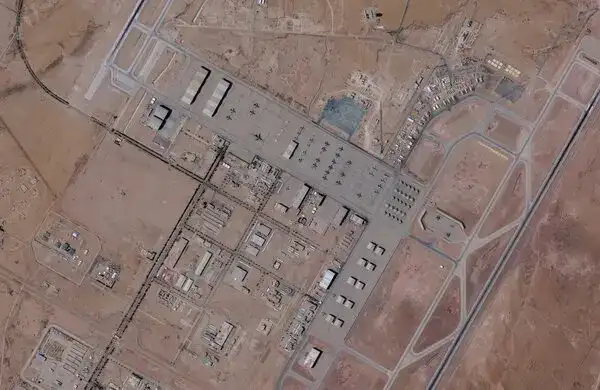
A combined Iranian missile and drone attack on a major U.S. military facility in Saudi Arabia has wounded American service members and reignited concerns over regional stability. The strike, which targeted Prince Sultan Air Base south of Riyadh, is part of a broader escalation in the conflict between Iran and the United States and its allies — a conflict now entering its second month.
At least 12 U.S. troops were injured in the attack, with two reported in serious condition, according to U.S. officials. The incident marks one of the most significant breaches of American defenses in recent weeks and underscores the ongoing dangers faced by personnel stationed in the Gulf.
What Happened: Missile and Drone Strike at Prince Sultan Air Base
On March 27, Iranian forces launched a coordinated assault involving ballistic missiles and unmanned aerial vehicles (drones) against Prince Sultan Air Base — a key hub for U.S. military operations in the Middle East. The attack struck infrastructure and wounded multiple service members based there.
This wasn’t a random or isolated strike. The base is a central location for American military logistics, aerial refueling operations, and command support across the region. Damaging such a facility signals a clear escalation in Iran’s campaign to challenge U.S. presence in the Gulf.
Alongside the injuries, the attack reportedly damaged U.S. refueling aircraft and an E‑3 Sentry airborne early warning and control aircraft (AWACS) — critical assets that support surveillance and aerial operations.
American Casualties and Military Impact
According to multiple reports:
- 12 U.S. troops were injured in the incident, with at least two in serious condition.
- The strike also damaged several American aircraft, including a high‑value AWACS platform and tanker planes that extend mission range and operational capability.
- These injuries contribute to a growing tally of U.S. military casualties since the conflict began, which now includes dozens of wounded troops and several fatalities.
Though not a full‑scale ground invasion, these attacks have tangible implications for U.S. force readiness and morale. They also highlight limitations in current air defense systems — even in heavily fortified areas.
The Strategic Importance of Prince Sultan Air Base
Prince Sultan Air Base is strategically vital for U.S. operations in the Middle East and Gulf region. It supports:
- Aerial refueling missions, which keep aircraft aloft for extended operations.
- Surveillance and early warning systems, primarily through platforms like the AWACS.
- Logistics and force projection, enabling rapid response across multiple theaters.
Because of its role, any successful attack on the base has broader implications for U.S. military posture and intelligence capabilities in the region. Damaging surveillance and refueling assets could constrain mission flexibility and impact ongoing operations.
Context: Escalation in the Iran–U.S. Conflict
This attack did not occur in isolation. It comes amid heightened military confrontation following U.S. and Israeli strikes on Iranian territory that began in late February 2026. Iran has since carried out multiple missile and drone attacks on American and allied positions, including military bases and embassies across the Middle East.
Prince Sultan Air Base has already been targeted several times in recent weeks, with earlier strikes damaging U.S. refueling aircraft. The March 27 assault follows continued Iranian aggression aimed at pushing American forces out of the region or weakening their capacity to mount operations.
In the broader conflict, countries such as Kuwait have also reported casualties due to Iranian missile strikes, signaling an expansion of hostilities beyond Saudi Arabia’s borders.
The Broader Middle East War
The conflict between the U.S. and Iran has now spilled into a wider regional confrontation:
- Iran‑backed Houthi rebels have launched attacks on Israel and naval traffic, opening new fronts in the conflict.
- Diplomatic efforts, including talks in Pakistan aimed at de‑escalation, are underway — but tension remains high.
- Iran has warned of further retaliation should U.S. forces consider a ground invasion or deeper military engagement.
This broader landscape of escalating violence threatens regional stability and global economic interests, including oil supply routes and international trade flow through strategic chokepoints such as the Strait of Hormuz.
U.S. Response and Military Preparedness
In response to the attack, U.S. Central Command has reiterated its commitment to force protection and operational readiness. Meanwhile:
- Additional U.S. forces, including thousands of Marines and Army personnel, are reportedly being deployed to the region to bolster defenses.
- Pentagon leaders have not ruled out defensive or limited offensive actions against Iranian capabilities.
- Air defenses and missile intercept systems have been strained, given the frequency and sophistication of drone and ballistic missile launches.
While official sources emphasize restraint publicly, tension between Iran, the U.S., and allied nations continues to increase, with each side signaling readiness to defend its interests.
Regional and Global Implications
The Gulf region is central to global energy markets. Escalating military operations risk spillover effects:
- Oil markets have seen volatility, with prices rising due to fears of supply disruptions.
- Shipping routes, especially through the Red Sea and around the Arabian Peninsula, face increased risk of attack or diversion.
- Allied nations are forced to balance diplomatic pressure with military cooperation, complicating international relations.
Any miscalculation or further strike on American or allied assets could prompt broader retaliation, drawing more nations into a conflict with far‑reaching consequences.
The Human Toll
Beyond the strategic and political dimensions, the human impact of the conflict is substantial:
- Over 300 U.S. service members have been wounded and at least a dozen killed since the outset of hostilities.
- Civilians and non‑combatants in the region have also suffered casualties due to missile and drone attacks, including those targeting infrastructure near civilian areas.
The injuries at Prince Sultan Air Base highlight the toll this war is exacting on military personnel serving far from home — and raise pressing questions about force protection, strategy, and the long‑term impact on service members and their families.
Diplomatic Efforts and Prospects for Peace
Amid the violence, diplomatic efforts continue:
- Pakistan has hosted talks involving Middle Eastern powers aimed at reducing hostilities.
- The U.N. and other international actors are pressing for ceasefire negotiations.
- Iran has publicly claimed willingness to pursue talks under certain conditions, even as it continues military action.
However, achieving a truce has proven challenging as both sides maintain firm positions on core security and political objectives.
What Comes Next?
As the conflict enters its second month, several key developments could shape the future trajectory:
- U.S. military posture: Whether the U.S. will increase troop deployments or revise strategic objectives.
- Iran’s capabilities: The ability of Iranian forces to sustain missile and drone strikes despite losses to their military infrastructure.
- Regional alliances: How Middle Eastern countries will navigate pressures from both Iran and the U.S.
Heightened tensions make it clear that the Gulf region remains a flashpoint for global geopolitics, and events like the strike on Prince Sultan Air Base will continue to influence international security discussions.
Conclusion
The Iranian missile and drone strike on the Prince Sultan Air Base in Saudi Arabia that injured 12 American troops is a stark reminder of how volatile the Middle East has become. That a sophisticated attack could breach defenses and wound U.S. service members highlights the intensity of the ongoing conflict and the risks associated with military engagement in the region.
With diplomatic efforts underway but violence continuing, the path forward remains uncertain. What is clear, however, is that this incident has broad implications — not just for U.S. military strategy and regional alliances, but also for the families of those serving and the geopolitical landscape as a whole.
Reuters. Twelve U.S. troops wounded in Iran strike on base in Saudi Arabia, U.S. official says. March 27, 2026.
https://www.reuters.com/world/middle-east/twelve-us-troops-wounded-iran-strike-base-saudi-arabia-us-official-says-2026-03-27/ Al Jazeera. At least 15 U.S. troops wounded in Iranian strike on Saudi airbase: Reports. March 28, 2026.
https://www.aljazeera.com/news/2026/3/28/at-least-15-us-troops-wounded-in-iran-strike-on-saudi-airbase-reports The Times of Israel. 12 U.S. troops wounded, 2 seriously, in Iranian attack on Saudi base — report. March 28, 2026.
https://www.timesofisrael.com/12-us-troops-wounded-2-seriously-in-iranian-attack-on-saudi-base-report/ TRT World. Iranian missiles slam Saudi base, 12 U.S. troops wounded, several jets damaged. March 27, 2026.
https://www.trtworld.com/article/ca439756be8c PBS NewsHour. U.S. troops wounded, planes damaged in Iranian strike on Saudi air base, officials say. March 27, 2026.
https://www.pbs.org/newshour/world/u-s-troops-wounded-planes-damaged-in-iranian-strike-on-saudi-air-base-official-says
 Jenn Sass