
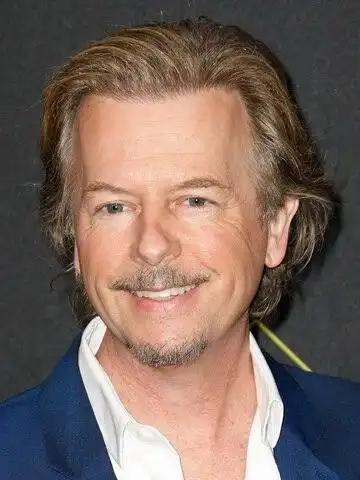
For years, fans have seen Saturday Night Live as a place where some of the biggest comedy stars in the world were discovered. But behind the sketches, celebrity impressions and live television pressure, there was another side to the show that audiences rarely saw: competition for attention. David Spade is now opening up about that side of SNL, admitting that he felt jealous when his fellow cast members received more airtime.
Spade’s confession offers a candid look at what it was like to be part of Saturday Night Live during one of the show’s most memorable eras. The comedian, who was a cast member from 1990 to 1996, recently discussed his experience on his Fly on the Wall podcast with fellow SNL alum Dana Carvey. Rather than pretending he was always comfortable watching other performers get bigger moments, Spade admitted that jealousy was something he experienced and openly acknowledged.
His comments are particularly interesting because the cast he worked with included comedians who would go on to become major Hollywood stars, including Adam Sandler, Chris Farley and Rob Schneider. With so much talent competing for limited sketch time, getting noticed was not simply about being funny. Performers also had to fight for memorable characters, strong sketches and enough airtime to make an impression on viewers.
David Spade Opens Up About SNL Jealousy
During a recent conversation on Fly on the Wall, Spade reflected on the feelings that came with watching other SNL cast members appear more frequently during the show. He explained that when he heard that someone was getting more airtime, he would openly admit that he was jealous.
Rather than treating jealousy as something shameful that had to be hidden, Spade said he could acknowledge it directly. He recalled telling Adam Sandler that a performance was funny while also admitting that he was jealous. For Spade, recognizing that another comedian had done something great could become motivation rather than simply resentment.
That distinction is what makes his confession more revealing. He was not describing a bitter feud in which one comedian wanted another to fail. Instead, Spade was describing the competitive environment of a comedy show where everyone wanted to perform at the highest possible level.
His attitude also shows how professional jealousy can sometimes have a productive side. Seeing someone else succeed can make a person question what they can do better. In Spade’s case, watching his friends get laughs and airtime pushed him to work harder on his own material.
Why Airtime Mattered So Much on Saturday Night Live
For an SNL cast member, airtime can be incredibly important. A performer can be part of a talented ensemble and still struggle to establish a recognizable identity if they rarely appear in sketches.
Every episode has a limited amount of time, and dozens of performers, writers and characters may compete for space. A comedian who receives a major role in a popular sketch can become one of the night’s most memorable performers, while someone who appears briefly may barely register with viewers.
This was especially important during the era when Spade was on the show. The early 1990s SNL cast featured an unusually strong group of comedians, and several members eventually became household names. Spade’s own career demonstrated how quickly a recurring television role could lead to opportunities in movies, television and stand-up comedy.
The pressure to stand out therefore wasn’t imaginary. Spade’s comments reveal what audiences couldn’t necessarily see while watching the finished broadcast: performers were aware of who was getting opportunities, whose sketches were making it through, and who was becoming more visible.
Adam Sandler Became an Example of That Competition
One of the most interesting parts of Spade’s story is that Adam Sandler was one of the people he felt jealous of. Today, Sandler is one of the most recognizable comedians and actors in Hollywood, with a career that extends far beyond his years on Saturday Night Live.
But during their SNL years, Sandler was simply another member of a highly competitive cast. Spade saw Sandler producing comedy that made audiences laugh and recognized that his friend had a talent worth learning from.
Spade’s willingness to tell Sandler that he was jealous also suggests a level of honesty between the two comedians. Instead of pretending that another person’s success didn’t bother him, he could admit that the success motivated him.
That kind of relationship is different from the traditional Hollywood rivalry narrative. The story isn’t simply about two comedians fighting for the spotlight. It is about performers who could recognize each other’s talent while simultaneously wanting to prove themselves.
Spade’s comments suggest that Sandler’s success gave him something to measure himself against. If Sandler was producing something great, Spade wanted to find a way to improve his own comedy.
SNL Was About “Upping My Own Game”
The most important takeaway from Spade’s comments is that he ultimately viewed competition as a reason to improve.
He explained that SNL was about “upping my own game,” describing an environment in which seeing another performer succeed could push him to become better.
That mindset may help explain why Spade was able to turn his SNL experience into a successful career. Instead of allowing jealousy to become a reason to resent his castmates, he could use it as information. If another comedian was getting more laughs, perhaps there was something he could learn. If another performer was getting more airtime, perhaps Spade needed to develop stronger material or a more memorable character.
It is a relatable admission because professional jealousy is not limited to Hollywood. People in almost every competitive field can experience similar feelings. Seeing a colleague receive a promotion, win an award or receive more attention can create an uncomfortable mixture of admiration and frustration.
What matters is what happens next.
For Spade, the answer appears to have been improvement.
The Competitive Culture Behind the SNL Spotlight
The public sees the finished version of Saturday Night Live: the opening monologue, sketches, Weekend Update, musical performances and closing credits. What viewers don’t see is the enormous amount of work and competition that happens before the broadcast.
Sketches are written, rewritten, rehearsed and cut. Performers have to fight for the strongest material, while producers and writers determine what ultimately makes it onto the show.
Spade recently reflected on another aspect of the SNL culture when discussing how today’s cast members interact with creator Lorne Michaels. He said he was surprised to hear that current cast member Sarah Sherman had texted Michaels about why one of her sketches had been cut. Spade’s reaction highlighted how different that relationship seemed compared with the environment he remembered.
For someone who spent six years inside the show, those changes offer a fascinating comparison between different generations of SNL performers.
The fact that Spade was surprised by the modern relationship with Michaels also reinforces how much the show’s internal culture has evolved over time.
David Spade’s SNL Years Were a Launchpad for His Career
Spade joined Saturday Night Live in 1990 and remained with the show until 1996. During that time, he became known for his sharp delivery, sarcastic characters and memorable impressions.
His work on SNL helped establish the comedic style that would become a major part of his career. After leaving the series, Spade moved into film and television, appearing in movies such as Tommy Boy, Black Sheep and Joe Dirt, while also continuing to work in television and stand-up comedy.
His friendship with Sandler and the late Chris Farley became an important part of his professional story as well. Spade and Farley worked together on several successful projects after their SNL years, creating a comedy partnership that remains fondly remembered by fans.
That history makes Spade’s comments about jealousy especially interesting. The people he was competing with for airtime were not anonymous rivals. They were people who would become his friends, collaborators and longtime colleagues.
Jealousy Doesn’t Always Mean Resentment
One of the most useful lessons in Spade’s story is that jealousy doesn’t necessarily mean someone wants another person to fail.
There is a difference between feeling jealous of someone’s success and actively trying to undermine that person. Spade’s comments appear to fall into the first category. He could look at Sandler’s performance and think, “I wish I had that moment,” while simultaneously recognizing that Sandler was funny.
In fact, admitting jealousy can sometimes be a sign of self-awareness.
Instead of pretending that everything was effortless, Spade acknowledged that he cared about his career. He wanted airtime because he wanted to be seen, he wanted his jokes to work and he wanted to establish himself as a comedian.
That honesty makes his story more relatable. Many people have experienced the feeling of watching someone else achieve something they wanted. The difficult part is turning that feeling into motivation rather than allowing it to become bitterness.
What David Spade’s Confession Reveals About SNL
Spade’s admission gives fans a glimpse into the emotional side of Saturday Night Live. The show may look spontaneous and effortless when it works, but performers are constantly aware that their opportunities are limited.
Being funny isn’t always enough. A comedian needs the right sketch, the right character, the right timing and the right opportunity.
Spade understood that reality early in his career. His jealousy wasn’t necessarily a sign that something was wrong with his relationship with his castmates. It was evidence that he cared about succeeding.
And because he was able to turn that feeling into motivation, it became part of his development as a performer.
His story also helps explain why some SNL casts become so legendary. When several talented comedians are competing against one another, the pressure can produce extraordinary work. Each performer raises the standard for everyone else.
The audience ultimately benefits from that competition.
Adam Sandler’s Success Made Spade Want to Improve
Sandler’s career after SNL eventually became enormous, but Spade’s recent comments remind fans that success looked different when the two were still young comedians working on a weekly sketch show.
Sandler’s ability to create characters and deliver jokes gave Spade something to admire and compete with. Instead of simply thinking that Sandler was receiving too much attention, Spade could recognize that his friend’s success demonstrated what was possible.
That is an important difference.
Competition can become destructive when people focus entirely on taking opportunities away from others. But it can become productive when people use other people’s achievements as evidence that they can improve themselves.
Spade’s description of his SNL experience suggests that he ultimately chose the second path.
Why This SNL Revelation Matters Now
David Spade’s confession may not be a scandal in the traditional sense, but it reveals something audiences rarely get to hear from successful entertainers: even established stars can experience insecurity.
When fans look back at iconic SNL casts, it can be easy to imagine that the comedians always knew they were going to become successful. The reality is much more uncertain. They were performers competing for laughs and airtime, often surrounded by people who were just as talented as they were.
Spade’s admission makes that history feel more human.
He wasn’t above jealousy. He wasn’t immune to comparison. He simply learned to use those feelings as motivation.
That may be one of the most revealing secrets behind his SNL success.
The Real Secret Behind Spade’s SNL Experience
The real secret isn’t that David Spade was jealous. It’s that he was willing to admit it.
In an industry where celebrities often carefully manage their public image, acknowledging insecurity can be surprisingly powerful. Spade didn’t present his SNL years as a perfectly confident journey. He described a competitive environment in which he noticed who was getting more airtime and sometimes wished he were getting the same opportunities.
But rather than allowing that jealousy to define his relationships, he used it to push himself.
His comments about Adam Sandler are particularly telling because they show admiration alongside competition. Spade could recognize that Sandler was doing great work while still wishing he had more opportunities of his own.
That combination of honesty, competitiveness and respect is what makes the story more interesting than a simple Hollywood jealousy headline.
Final Thoughts
David Spade’s latest comments provide an unusually honest look behind the curtain of Saturday Night Live. The comedian admitted that he felt jealous when his co-stars received more airtime, but he also explained that watching talented performers succeed encouraged him to raise his own standards.
His friendship with Adam Sandler offers the clearest example. Instead of hiding his jealousy, Spade could tell Sandler when he thought something was funny and admit that he wished he had delivered it himself.
That confession reveals an important part of what made the SNL environment so competitive. Every performer wanted to be remembered, every sketch represented an opportunity and every minute of airtime mattered.
For fans, Spade’s story is a reminder that even the comedians who eventually became Hollywood stars once worried about the same things that affect performers everywhere: getting noticed, proving themselves and wondering whether someone else was doing better.
In the end, Spade’s biggest lesson from Saturday Night Live wasn’t simply how to deal with jealousy. It was how to turn that uncomfortable feeling into motivation. Instead of asking why someone else was succeeding, he learned to ask what he could do to become better.
And that may be the most revealing part of this newly exposed SNL secret: behind the laughter, the competition was real, but so was the respect.
SEO Keywords: David Spade, SNL, Saturday Night Live, David Spade jealousy, David Spade SNL, Adam Sandler, SNL cast, SNL secrets, SNL behind the scenes, David Spade Adam Sandler, SNL airtime, Hollywood comedy, Saturday Night Live secrets, Fly on the Wall podcast.