
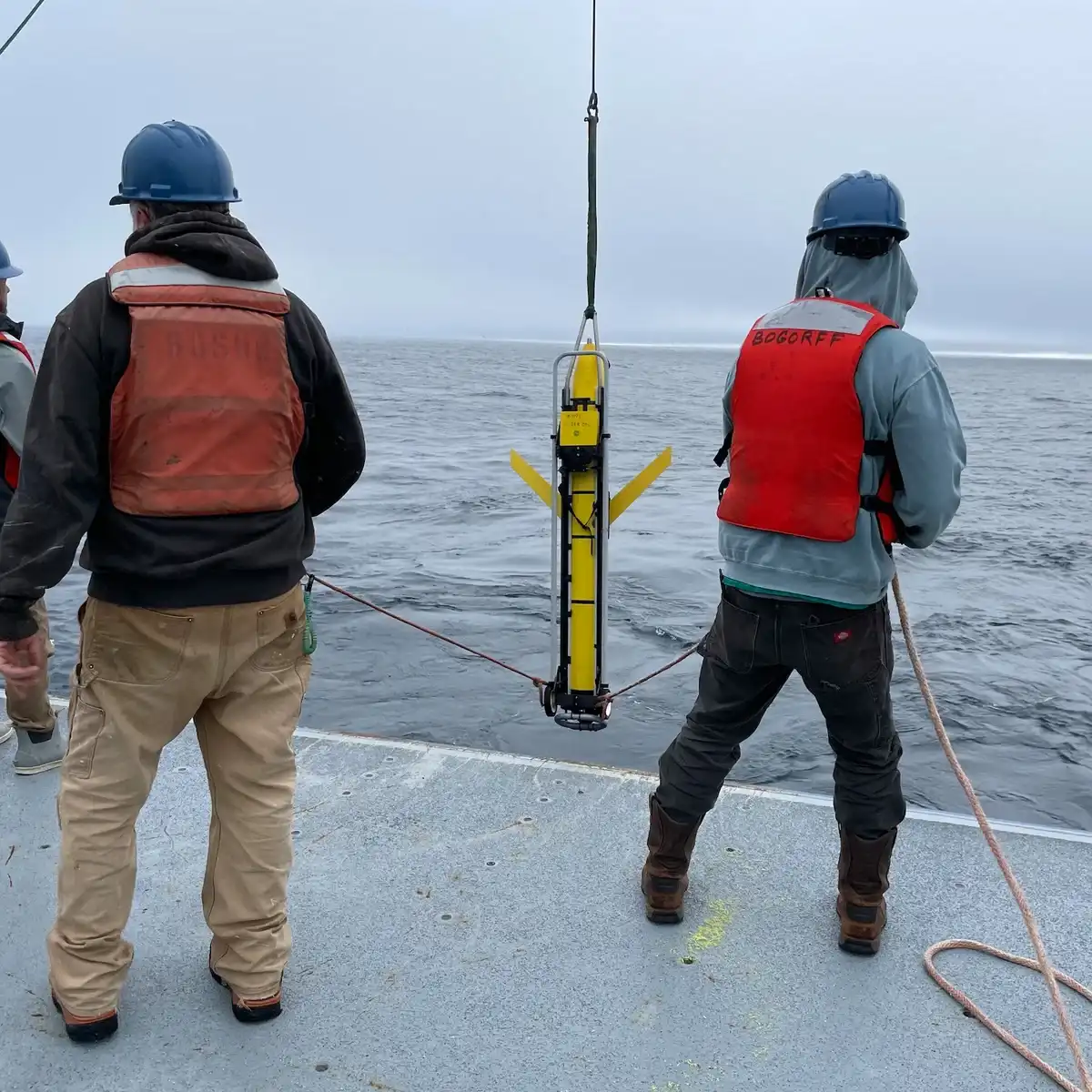
A growing wave of concern is spreading through the scientific community after the Trump administration moved forward with plans to dismantle much of the Ocean Observatories Initiative (OOI), one of the world’s most ambitious ocean monitoring systems. The decision has sparked criticism from climate researchers, oceanographers, environmental advocates, and policymakers who argue that the loss of this critical infrastructure could significantly weaken humanity’s ability to understand the oceans and their role in regulating Earth’s climate.
For more than a decade, the Ocean Observatories Initiative has quietly collected an extraordinary amount of real-time information from some of the most important marine environments on the planet. Through a network of more than 900 sensors positioned throughout the Atlantic and Pacific Oceans, researchers have been able to track ocean circulation, marine ecosystems, underwater conditions, carbon absorption, and the long-term impacts of climate change.
Now, much of that system is scheduled to be removed.
The move comes amid broader federal budget reductions affecting scientific research programs and has quickly become one of the most controversial environmental policy decisions of the year.
What Is the Ocean Observatories Initiative?
The Ocean Observatories Initiative was created to provide continuous, long-term monitoring of ocean conditions. Unlike short-term research missions that collect data during specific periods, the OOI was designed to function for decades, creating an uninterrupted record of how oceans change over time.
The system cost approximately $368 million to establish and includes hundreds of instruments deployed across multiple observation sites. These sensors continuously gather information about temperature, salinity, ocean currents, carbon dioxide levels, marine ecosystems, and numerous other environmental indicators.
Scientists often compare long-term monitoring systems to medical records. Just as doctors rely on years of patient information to understand health trends, climate researchers rely on decades of environmental data to identify meaningful changes in Earth’s systems.
The OOI was intended to operate for roughly 25 to 30 years. Instead, many of its components are being retired after just over a decade of operation.
According to announcements from the National Science Foundation, infrastructure at several observation arrays will be removed over the next 15 months, leaving only a limited portion of the network operational.
Why Scientists Are Alarmed
The reaction from the scientific community has been swift and intense.
Researchers argue that climate science depends on long-term datasets. Detecting meaningful environmental trends often requires decades of uninterrupted observations. A monitoring system that ends after ten years may provide useful information, but it falls short of the time horizon needed to fully understand many climate processes.
One of the primary concerns is the loss of continuity.
Climate change does not occur in predictable yearly increments. Ocean systems can experience natural fluctuations that last years or even decades. Scientists need long-term records to distinguish between short-term variability and long-term climate trends.
By dismantling the network now, researchers fear that valuable scientific records may become incomplete, making future analysis far more difficult.
Many experts have noted that the initiative was just beginning to produce the type of long-duration datasets that climate researchers need most.
The timing, they argue, could not be worse.
Why Oceans Matter More Than Most People Realize
When people think about climate change, they often picture rising temperatures, droughts, storms, or melting glaciers.
What many fail to recognize is that the ocean plays a central role in all of these processes.
The world’s oceans absorb vast amounts of heat generated by greenhouse gas emissions. They also absorb significant quantities of carbon dioxide from the atmosphere. Without the ocean acting as a massive buffer, global warming would likely be advancing even faster than it currently is.
Ocean currents distribute heat around the planet and influence weather systems across continents.
Changes in ocean circulation can affect:
- Hurricane intensity
- Rainfall patterns
- Agricultural productivity
- Fisheries
- Coastal flooding
- Global temperatures
Because oceans influence nearly every aspect of Earth’s climate system, understanding what happens beneath the surface is essential for accurate forecasting and environmental planning.
The Ocean Observatories Initiative provided scientists with a rare opportunity to observe these processes continuously in real time.
The Atlantic Meridional Overturning Circulation Concern
Among the most valuable monitoring locations in the OOI network is a site located in the Irminger Sea between Greenland and Iceland.
This station has helped researchers study the Atlantic Meridional Overturning Circulation, commonly known as AMOC.
The AMOC functions like a massive conveyor belt that transports warm and cold water throughout the Atlantic Ocean. It plays a critical role in regulating weather and climate patterns across Europe, North America, and other regions.
Scientists have spent years investigating whether climate change could weaken this circulation system.
A significant slowdown could have major consequences, including changes in weather patterns, sea-level rise along portions of the U.S. East Coast, and disruptions to marine ecosystems.
Monitoring stations within the OOI network have been instrumental in improving understanding of these complex processes.
The loss of these observations could leave researchers with fewer tools to track one of the most important climate systems on Earth.
The Administration’s Explanation
Federal officials have defended the decision as part of a broader effort to realign scientific priorities and manage research infrastructure more efficiently.
The National Science Foundation has described the move as a “descoping” rather than a complete cancellation. Officials argue that scientific priorities evolve over time and that resources must be allocated toward emerging technologies and new research opportunities.
Supporters of the decision point to budget pressures and argue that government agencies must periodically reassess expensive programs.
From this perspective, maintaining a large-scale monitoring system indefinitely may not represent the most efficient use of taxpayer funding.
However, critics argue that the relatively modest operating costs of the initiative are outweighed by the long-term scientific value it provides.
The debate highlights a fundamental disagreement about how governments should invest in scientific infrastructure.
Budget Cuts and a Broader Pattern
The Ocean Observatories Initiative does not exist in isolation.
The dismantling effort comes amid broader reductions in federal climate and environmental research spending.
Over the past year, multiple scientific programs have faced budget constraints, staffing reductions, or restructuring efforts.
Many researchers view the OOI decision as part of a larger trend that places less emphasis on climate science and environmental monitoring.
Supporters of these policy changes argue that government spending must be controlled and that agencies should focus on core priorities.
Critics counter that reducing scientific observation systems creates risks that may not become apparent until years later.
Once long-term monitoring networks are dismantled, rebuilding them can be extraordinarily expensive and time-consuming.
In some cases, lost data can never be recovered.
The Cost of Losing Long-Term Data
One of the biggest concerns among scientists is that climate records derive their value from continuity.
Imagine trying to understand a movie after watching only random scenes.
That is often how environmental science works without continuous observation.
Researchers depend on uninterrupted records to identify patterns, detect emerging trends, and improve forecasting models.
A ten-year gap in data can limit future research opportunities for decades.
Many scientists argue that the true value of the OOI was not simply the information it provided today but the information it would continue providing over the next twenty years.
By ending the project early, they fear future generations may lose access to insights that would have been impossible to obtain any other way.
Economic Consequences Beyond Climate Research
Although much of the public discussion has focused on climate science, the OOI also contributes to practical economic activities.
Ocean data supports:
Commercial fisheries
Shipping operations
Coastal infrastructure planning
Disaster preparedness
Weather forecasting
Marine resource management
Researchers use information from ocean monitoring systems to understand marine heat waves, ecosystem changes, and coastal hazards that affect local economies.
Fisheries, in particular, benefit from scientific observations that help predict shifts in fish populations and ocean conditions.
Communities that depend on marine industries may ultimately feel the effects of reduced monitoring capacity.
Public Reaction and Political Debate
The announcement has generated strong reactions from environmental organizations, scientific institutions, and lawmakers.
Many Democratic officials have criticized the move as short-sighted and harmful to scientific progress.
Environmental advocates argue that dismantling monitoring infrastructure during a period of rapid climate change sends the wrong message about national priorities.
Meanwhile, supporters of the administration’s broader spending agenda argue that difficult budget choices are necessary and that government programs should continually justify their costs.
The disagreement reflects a broader political divide over climate policy, environmental regulation, and the role of government-funded science.
What Happens Next?
The removal process has already begun at some locations and is expected to continue over the next several months.
According to current plans, equipment from multiple observation sites will be recovered and removed from the ocean.
Some elements of the system are expected to remain operational, including portions of a seafloor cable network used for geological and seismic monitoring.
However, much of the climate and oceanographic observation infrastructure that made the OOI unique will be phased out.
Researchers are now exploring alternative methods for preserving some monitoring capabilities, though many acknowledge that replacing such a large and sophisticated network would be difficult.
Final Thoughts
The decision to dismantle much of the Ocean Observatories Initiative marks a significant moment in the ongoing debate over climate science, federal spending, and environmental policy.
Supporters see the move as a necessary reassessment of research priorities in an era of fiscal constraints. Critics view it as the premature termination of a globally important scientific resource that was designed to serve generations of researchers.
Regardless of political perspective, one fact remains clear: the oceans play a central role in Earth’s climate system, and understanding them requires long-term observation.
As the sensors are removed and monitoring stations go dark, scientists, policymakers, and the public will continue debating whether the benefits of budget savings outweigh the potential loss of knowledge.
The answer may not become fully clear for many years to come.
References
- Associated Press – Scientists lose critical climate record as ocean observatory will go dark under Trump funding cuts
- The Guardian – Dismay as Trump officials to dismantle key ocean monitoring system
- Ocean Observatories Initiative – NSF OOI Descoping Update for the Community
- The Washington Post – Scientists lose critical climate record as ocean observatory will go dark under Trump funding cuts
- E&E News by POLITICO – Trump admin is terminating a vast network of ocean monitors
 Jenn Sass