
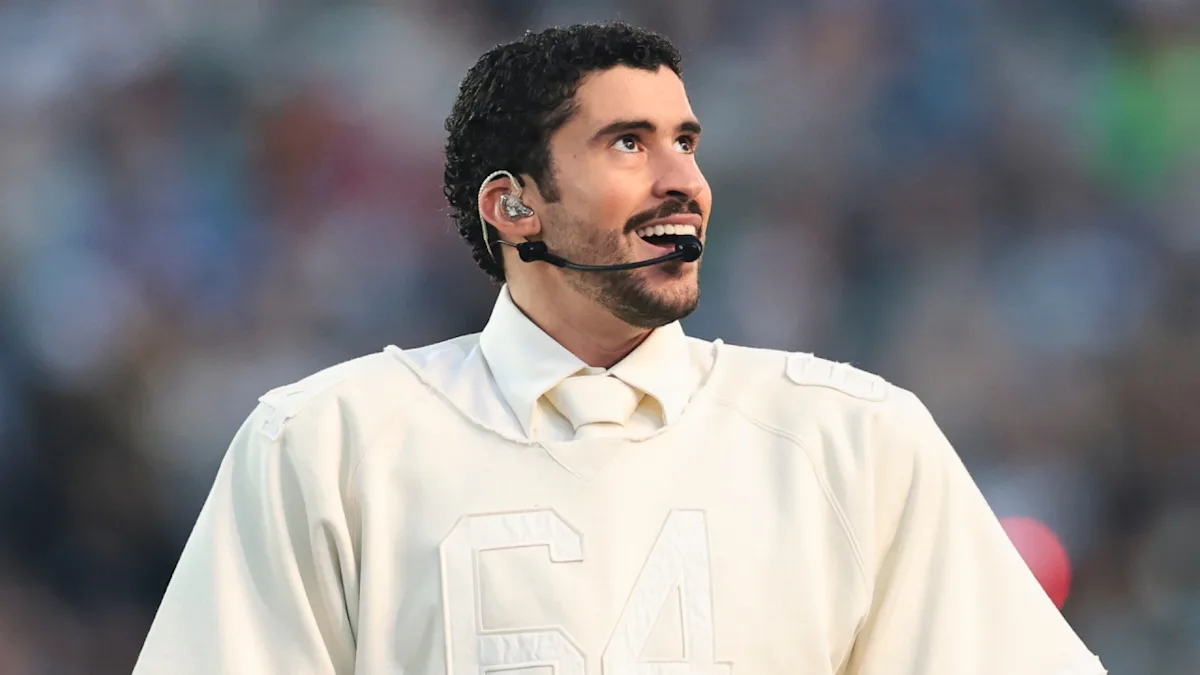
In 2026, the internet doesn’t just comment on an event; it cannibalizes it. Within seconds of the Super Bowl LX halftime show, the satire machine went from zero to “total war.” No mercy was shown, no filters were applied, and for a few hours, the boundary between reality and digital chaos completely dissolved.
When Bad Bunny (Benito Antonio Martínez Ocasio) delivered his uncompromising, all-Spanish tribute to Puerto Rico, he didn’t just give a performance—he handed the internet a blank check for satire. And boy, did they cash it.
The Satire Surge: When “Fake” Feels Realer Than “Real”
The most glaring example of the satire cycle happened almost instantly. A viral image began circulating of a performer who looked remarkably like Bad Bunny, wearing a dress and—shockingly—lighting an American flag on fire backstage. Within an hour, it had millions of shares.
The Reality Check:
- Fact: The image was 100% AI-generated.
- The Source: A Facebook page called “Qbanguy,” which explicitly labels itself as “100% Not Real.”
- The Catch: Despite the satire label and a digital “SynthID” watermark, the image triggered genuine political outrage, including a “Pants on Fire” rating from fact-checkers.
This is the state of pop culture in 2026: we have reached a point where the parody is so high-fidelity that it doesn’t matter if it’s fake. The reaction to the fake image becomes a real cultural event. We aren’t asking “Is this true?” We are asking “How do I feel about this?”
The Questions Everyone Is (Ironicaly) Asking
As the “Outrage Economy” and the “Satire Machine” collided, several burning questions emerged from the digital wreckage:
- “Did the NFL forget to hire a translator?” The joke of the night was that the halftime show felt like a 13-minute Rosetta Stone ad. Critics mocked the all-Spanish set, while fans countered with memes about how “Americans have had four months to learn Spanish” (a callback to Benito’s 2025 SNL monologue).
- “Is Lady Gaga officially a salsa singer now?” Watching a white pop icon perform a salsa-infused version of “Die With a Smile” while wearing a Puerto Rican maga flower became the ultimate meme of “reverse assimilation.” The internet’s verdict: “Lady Gaga has been traded to the Puerto Rican national team.”
- “Why was Kid Rock lip-syncing in jean shorts?” The satire wasn’t reserved for Bad Bunny. The Turning Point USA “All-American” alternative show, featuring Kid Rock, became the target of relentless ridicule. Clips of the low-budget production compared to Benito’s 10,000 pyrotechnics led to the viral phrase: “One man’s revolution is another man’s backyard BBQ.”
No Filters, No Context, Just Content
The speed of this satire is driven by a lack of context. People aren’t looking at the “LUMA” power poles or the sugar cane fields as historical symbols of colonial exploitation; they are looking at them as visual prompts for their own punchlines.
When Bad Bunny “vanished” by deleting his Instagram, the satire went into overdrive. Memes depicted his PR team frantically hitting a giant “DELETE” button while the building burned around them. Others suggested he hadn’t deleted the account at all, but that it had simply “lost power” like the Puerto Rican grid he referenced in his set.
The Takeaway: Satire as the New Reflection
In 2026, we don’t reflect on culture through essays or thoughtful debate. We reflect through mockery. Satire has become the filter through which we process things that feel too heavy, too political, or too complex.
Bad Bunny’s Super Bowl performance was an “Exuberant Act of Resistance,” but to the internet, it was also a “Questionable Career Move,” a “Political Stunt,” and a “Meme Goldmine.” In the end, the questions we are asking—even the satirical ones—reveal more about our own divided culture than they do about the man on the stage.
 Mark Shlart