
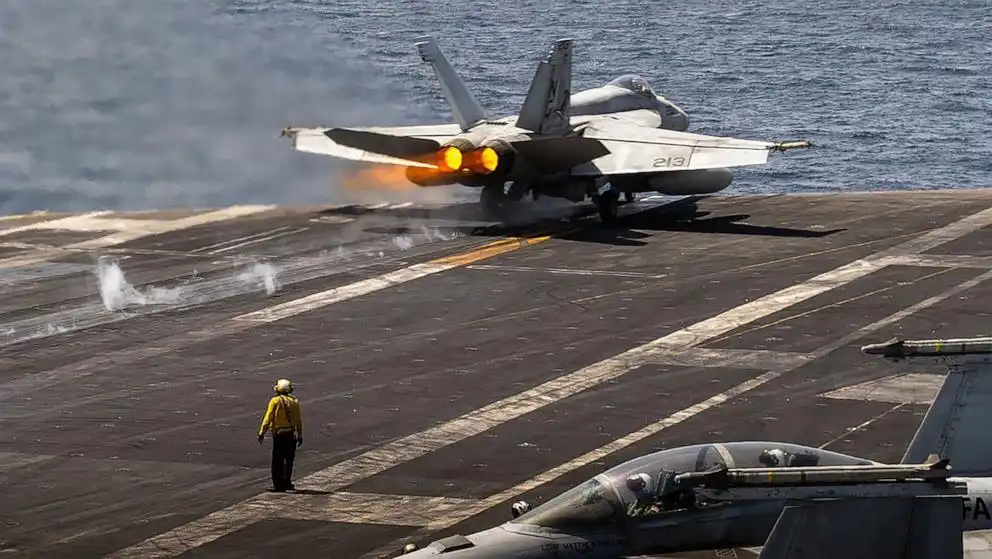
The United States military has confirmed that it carried out what it described as “self-defense” strikes in southern Iran, targeting missile launch sites and Iranian boats allegedly attempting to place mines near strategic waterways. According to United States Central Command, the operations were conducted to protect American troops from threats posed by Iranian forces amid ongoing tensions in the Middle East.
The strikes, announced by U.S. Central Command on May 25, immediately drew global attention because they occurred during a fragile ceasefire period and amid ongoing diplomatic efforts involving Iran, the United States, and regional mediators. While U.S. officials emphasized that the operation was defensive and limited in scope, the incident has intensified concerns about the possibility of wider military escalation in one of the world’s most strategically important regions.
The situation also highlights the increasingly volatile relationship between Washington and Tehran, where military pressure and diplomatic negotiations are unfolding simultaneously.
What Happened During the U.S. Strikes in Iran?
According to statements released by United States Central Command, U.S. forces conducted targeted strikes in southern Iran against missile launch facilities and Iranian boats that were allegedly attempting to deploy naval mines.
CENTCOM spokesperson Navy Captain Tim Hawkins stated that the strikes were intended “to protect our troops from threats posed by Iranian forces” while emphasizing that the U.S. military continued to “use restraint during the ongoing ceasefire.” (Reuters)
Reports indicate that some of the targeted areas were near Bandar Abbas, a critical port city located near the Strait of Hormuz. Explosions were reportedly heard in the region, and some Iranian media outlets later claimed that members of the Islamic Revolutionary Guard Corps were killed during the incident. (AP News)
The strikes reportedly involved:
- Missile launch sites viewed as threats to U.S. assets
- Boats allegedly attempting to lay mines in strategic waterways
- Defensive operations aimed at protecting U.S. military personnel
U.S. officials described the operation as limited in scope and not intended to trigger a broader military campaign. However, the timing of the strikes has significantly increased tensions across the region.
Why the Strait of Hormuz Matters
One of the most important aspects of the incident is its proximity to the Strait of Hormuz, one of the world’s most strategically critical maritime chokepoints.
The Strait of Hormuz connects the Persian Gulf to global shipping routes and serves as a major transit point for oil exports from the Middle East. A significant percentage of the world’s oil supply passes through this narrow waterway each day.
Any military confrontation near the Strait of Hormuz immediately raises concerns about:
- Global oil supply disruptions
- Rising energy prices
- Shipping security risks
- Increased military presence in the Gulf region
The allegation that Iranian boats were attempting to place mines near the area has heightened fears that maritime trade routes could become targets during future confrontations.
Historically, tensions involving the Strait of Hormuz have had major consequences for global markets and geopolitical stability.
The U.S. Position: “Self-Defense” and Force Protection
The U.S. government has framed the strikes as defensive operations rather than acts of escalation.
According to CENTCOM, the military action was taken specifically to protect U.S. personnel and naval assets from imminent threats. (GMA Network)
This distinction is important because international military operations are often justified under the principle of self-defense when governments believe their forces are under direct threat.
U.S. officials emphasized several points:
- The operation was limited and targeted
- The strikes were not intended to derail ceasefire discussions
- The U.S. remains open to diplomatic negotiations
- Military action would continue if American troops face threats
Supporters of the strikes argue that failing to respond to potential threats could endanger U.S. forces operating in the region.
Critics, however, warn that even limited strikes can quickly spiral into broader conflict, especially in such a volatile geopolitical environment.
Iran’s Reaction and Regional Implications
At the time of the initial reports, Iranian officials had not issued a full formal military response, though local media acknowledged explosions and reported casualties linked to the strikes. (The Times of India)
Iran has historically condemned U.S. military actions in the region as violations of sovereignty and has frequently warned against foreign military presence near its borders and waterways.
The situation is particularly sensitive because Iran maintains strong influence across several regional proxy networks and allied militias throughout the Middle East.
Analysts worry that even if Iran avoids direct military escalation, tensions could increase through:
- Proxy militia activity
- Maritime incidents in the Gulf
- Cyber operations
- Missile or drone attacks targeting regional assets
The Middle East remains one of the world’s most interconnected security environments, meaning localized incidents can rapidly spread into wider regional crises.
The Role of Donald Trump and Ongoing Negotiations
The strikes occurred during the administration of Donald Trump, whose foreign policy approach toward Iran has combined aggressive pressure tactics with attempts at negotiation.
Interestingly, even as the strikes were taking place, President Trump reportedly stated that negotiations with Tehran were “proceeding nicely.” (AP News)
This dual-track strategy—simultaneously applying military pressure while pursuing diplomacy—has become a defining feature of the current U.S. approach.
The administration has also linked broader Middle East diplomacy to discussions surrounding expanded normalization agreements in the region, including efforts connected to the Abraham Accords.
Some analysts believe the military strikes may have been intended not only as defensive measures but also as demonstrations of leverage during negotiations.
Others fear that combining diplomacy with military escalation risks undermining trust and complicating peace efforts.
Global Market Reactions and Oil Price Concerns
Whenever tensions escalate between the United States and Iran, global financial markets immediately react due to fears surrounding energy supply disruption.
Oil traders closely monitor developments involving the Strait of Hormuz because any threat to shipping routes could significantly impact global oil prices.
Potential market consequences include:
- Rising crude oil prices
- Increased inflationary pressure globally
- Stock market volatility
- Increased defense sector activity
- Safe-haven investment flows into gold and U.S. Treasuries
Even limited military incidents can create major uncertainty in energy markets because of the strategic importance of Gulf shipping lanes.
Financial analysts note that investors are already operating in an environment shaped by inflation concerns, geopolitical instability, and global economic uncertainty. Additional conflict risks in the Middle East could further complicate market conditions.
The Risk of Escalation in the Middle East
One of the biggest concerns among geopolitical experts is the possibility of unintended escalation.
Military analysts often warn that limited strikes can trigger retaliatory cycles, especially when multiple armed actors are involved across a region as complex as the Middle East.
Potential escalation scenarios include:
- Iranian retaliation against U.S. assets
- Expanded naval confrontations in the Gulf
- Proxy conflicts involving allied militias
- Cyberattacks targeting infrastructure
- Increased missile or drone exchanges
The challenge for policymakers is balancing deterrence with restraint.
U.S. officials have repeatedly stated that they do not seek broader war with Iran, but maintaining that balance becomes increasingly difficult as military incidents accumulate.
Diplomatic Challenges Ahead
Diplomatic negotiations involving Iran have historically been difficult due to disagreements over nuclear policy, sanctions, regional influence, and military activity.
The latest strikes complicate an already fragile negotiation environment.
Several key questions now dominate diplomatic discussions:
- Can ceasefire efforts survive ongoing military incidents?
- Will Iran continue participating in negotiations?
- How will regional allies respond?
- Can the U.S. maintain deterrence without triggering escalation?
International mediators, including Gulf states and other regional actors, are expected to continue pushing for de-escalation efforts.
However, trust remains limited on all sides.
Media Coverage and Public Debate
The strikes have generated intense debate across international media and political circles.
Supporters argue that the United States has a responsibility to defend its troops and maintain freedom of navigation in strategic waterways.
Critics question whether military actions during sensitive diplomatic talks could worsen instability rather than contain it.
The incident also reignites broader debates surrounding:
- U.S. military involvement in the Middle East
- Long-term regional strategy
- The balance between diplomacy and force
- The risks of perpetual military engagement
Public opinion remains divided, particularly as Americans continue debating the role of U.S. military power abroad.
Conclusion
The recent “self-defense” strikes carried out by United States Central Command against targets in southern Iran represent another dangerous chapter in the long-running tensions between Washington and Tehran.
While U.S. officials insist the strikes were defensive and necessary to protect American forces, the operation has intensified fears of broader regional instability, especially given the strategic importance of the Strait of Hormuz and the fragile state of ongoing diplomatic negotiations.
As military pressure and diplomacy continue unfolding simultaneously, the world is watching closely to see whether both sides can avoid further escalation—or whether the latest confrontation signals a deeper and more dangerous phase in U.S.-Iran relations.
Citations
- Reuters – U.S. Military Strikes Iranian Boats and Missile Launch Sites
- Associated Press – U.S. Self-Defense Strikes in Iran
- Washington Post – U.S. Renews Strikes on Iran
- Reuters via GMA News – CENTCOM Statement on Iran Strikes
- NDTV – U.S. Conducts Self-Defense Strikes on Iranian Targets
- Jerusalem Post – CENTCOM Confirms Strikes in Southern Iran
 Jenn Sass